From summer thunderstorms to hurricane season, a little preparation goes a long way. Here is how locals and visitors can stay ready.
Sign up for warnings and keep a battery-powered way to get them when the power is out. Know the difference between a watch (conditions are possible) and a warning (it’s happening now — take action).
Weather, beach-flag, water-quality and event advisories for the Grand Strand, sent straight to you.
Official reverse-notification alerts from Horry County, the City of Myrtle Beach and North Myrtle Beach.
Official forecasts and warnings from the National Weather Service. Local NOAA Weather Radio frequency 162.400 MHz.
WPDE, WBTW, WMBF, The Sun News and MyHorryNews for on-the-ground coverage.
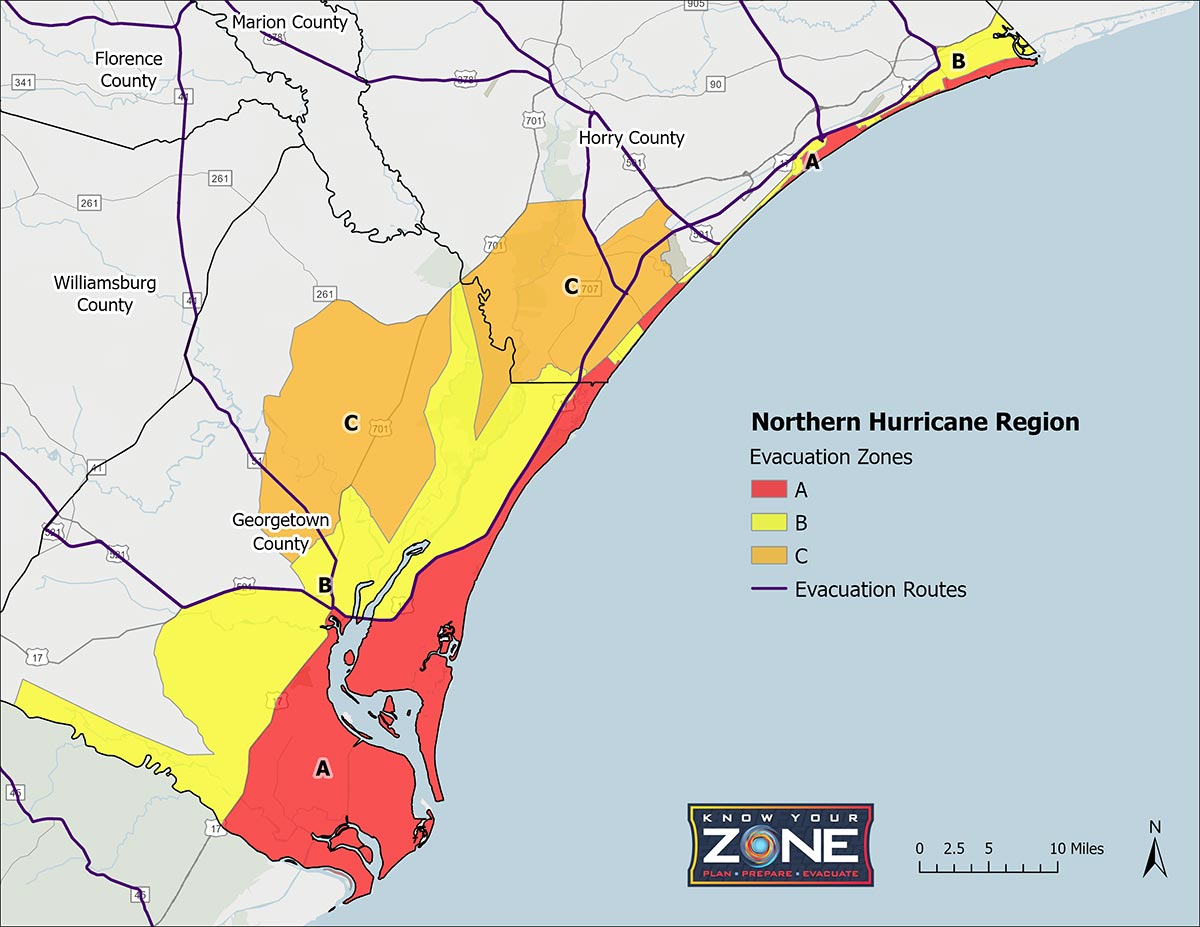
South Carolina is divided into hurricane evacuation zones, and evacuation orders are issued by zone. Look up your address on the state’s Know Your Zone map before a storm is ever on the way — so you already know whether, and when, you’d need to leave. Knowing your zone ahead of time saves critical minutes.
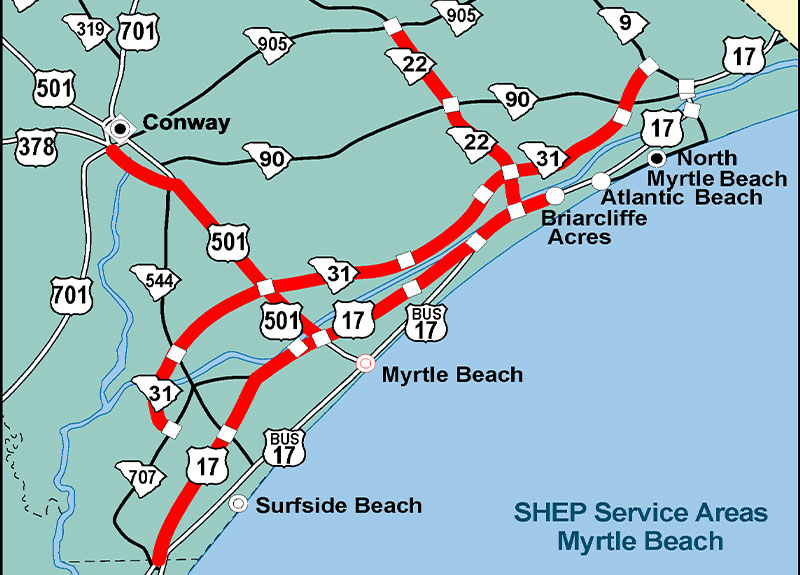
If an evacuation is ordered, the main routes off the Grand Strand head inland to the west. Primary corridors include US-501 toward Conway and Marion (lanes may be reversed westbound during a mandatory evacuation), the SC-22 Conway Bypass, and SC-31 Carolina Bays Parkway.
Leave early, keep your gas tank full, and always follow posted signs and official instructions — routes and lane reversals are set by SCEMD and SCDOT at the time of the storm.
A little prep now makes a big storm far less stressful.
Keep at least 72 hours of supplies ready: water, non-perishable food, flashlights and batteries, phone chargers, medications, important documents, a first-aid kit, and pet essentials.
Trim trees, reinforce or shutter windows, move vehicles to higher ground, and unplug electronics before a storm arrives.
Turn around, don’t drown. Just 6 inches of moving water can knock you off your feet, and 12–18 inches can float a car.
When thunder roars, go indoors — and stay inside for at least 30 minutes after the last clap of thunder before heading back out.
Storms are named in order as they form. If you hear one of these named, it’s a tropical storm or hurricane worth watching.