Get alerts

Tent & Umbrella Rules for Myrtle Beach Area

Here's what you need to know to stay cool, safe and compliant with local laws.

Staying Shaded on The Beach

A little shade can make a beach day much more enjoyable, but it’s important to know that tent and umbrella rules vary across the Grand Strand. Each city and jurisdiction has its own regulations based on public safety, lifeguard visibility, emergency vehicle access, and beach conditions.

Before setting up for the day, take a moment to check the rules for the beach you’re visiting. Knowing what’s allowed—and where it can be placed—helps keep everyone safe, ensures lifeguards have clear sightlines to the water, and makes the beach more enjoyable for all visitors.

Rules below can change seasonally, so if your have questions, it’s best to confirm the current ordinance with each town or county before you set up.
By Municipality

Myrtle Beach Area Tent & Umbrella Rules

Click anywhere on map to see regulations in that area:
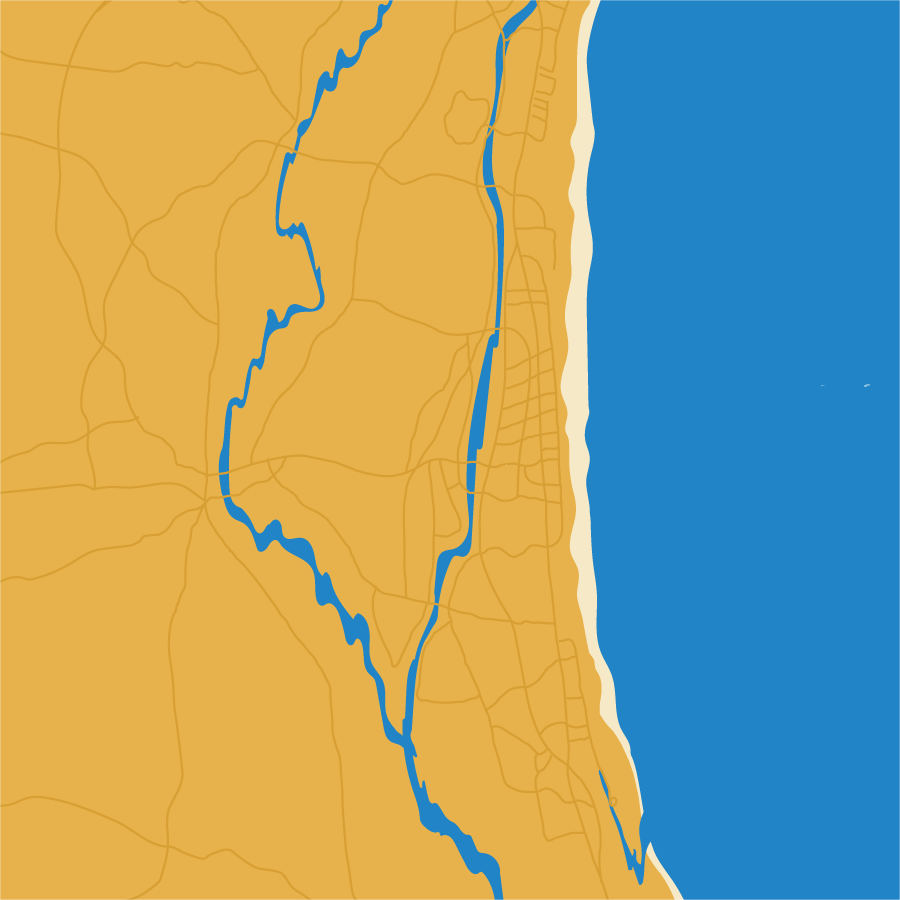
Map of areas

Horry County

Horry County governs the beaches from the North Myrtle Beach town limits south to the Dunes Golf & Beach Club in Myrtle Beach (excluding the town of Briarcliffe Acres); from Springmaid Pier south to the Surfside Beach town limits, including Myrtle Beach State Park; and from the Surfside Beach town limits south to the Georgetown County line.

  • Tents, cabanas, Shibumi shades, tarps and similar shade devices are prohibited year-round.
  • Pop-up tents for infants and children are allowed if they measure no more than 4 feet wide, 3 feet tall and 3 feet deep.
  • Circular umbrellas with a maximum diameter of 7 feet, 6 inches are permitted.
  • Beach umbrellas may not be placed within 10 feet of the umbrella line established by beach franchise holders.
  • Umbrellas may not obstruct a lifeguard’s view.
  • Shade devices must be secured but may not be tied together or connected in any way.
  • All shade devices and personal belongings must be removed from the beach between 7 p.m. and 8 a.m. Any items left on the beach during those hours will be removed.

North Myrtle Beach Umbrella Rules

The City of North Myrtle Beach’s umbrella rules are in effect during the summer season, from May 15 through Labor Day. During this time, umbrellas are the only shade devices allowed, with the exception of infant tents.

  • Tents, tarps, cabanas, pavilions and similar shade structures — including Shibumi shades — are not allowed on North Myrtle Beach beaches during the peak tourist season.
  • Umbrellas must have a center pole no taller than 7 feet, 6 inches, and a canopy no wider than 9 feet in diameter.
  • The only exception is an infant tent measuring no more than 31 inches high, 31.5 inches wide and 38 inches deep. Infant tents may be used only to shade children 18 months old or younger.
  • No shade devices are allowed within the emergency vehicle access lane, located about 20 to 25 feet seaward of the dune line. Look for city trash cans, pylons or flags that mark this area before setting up for the day.
  • After Labor Day, the city’s umbrella rules are relaxed and a variety of shade devices are permitted.
  • Remember to remove all beach equipment — including umbrellas, towels and toys — between 7 p.m. and 8 a.m.

Atlantic Beach Tent & Umbrella Rules

Tents and shade canopies measuring 100 square feet or less (10 feet by 10 feet) are allowed on the beach year-round, provided they are properly secured, attended and not left on the beach overnight.

Myrtle Beach Tent & Umbrella Rules

  • The City of Myrtle Beach bans large beach canopies, tents and similar non-umbrella shade devices during the summer season, from Memorial Day through Labor Day.
  • During the summer season, only circular umbrellas with a maximum diameter of 7 feet, 6 inches are allowed, with the exception of infant tents.
  • Infant tents or canopies are allowed year-round but must be no larger than 4 feet wide, 3 feet tall and 3 feet deep.
  • Umbrellas must be placed in line with or behind the established umbrella line to avoid obstructing visibility along the shoreline.
  • From Labor Day through Memorial Day, Myrtle Beach allows shade tents, canopies and other non-umbrella shade devices on its beaches.
  • During the off-season, shade structures may be no larger than 12 feet by 12 feet and must be placed in line with or behind the established umbrella line.

Surfside Beach Tent Rules

The Town of Surfside Beach allows tents and canopies year-round, subject to the following restrictions:

  • Tents and canopies may be no larger than 10 feet by 10 feet.
  • Umbrellas may be no taller than 7 feet, 6 inches and no wider than 9 feet in diameter.
  • Beach umbrellas, shade devices and other personal items may not interfere with a lifeguard’s line of sight or be placed in front of a lifeguard stand.
  • All shade devices must be moved if lifeguard stands are relocated because of the rising tide.
  • At least 10 feet of space must be maintained between tents. No beach equipment or personal items may be placed between tents.
  • Tents must be secured using straight tie-downs.
  • A single row of tents is permitted from Melody Lane to 17th Avenue North.
  • Emergency access lanes must remain clear at all times. Follow all posted clearance requirements to ensure emergency vehicles can pass.
  • No tents, shade devices or other personal items may be left on the beach overnight, from 9 p.m. to 7:30 a.m., or left unattended at any time.
By Device Type

Which Type of Beach Shade Are You Bringing?

Here’s a look at common types of shade devices and what you need to know about each:
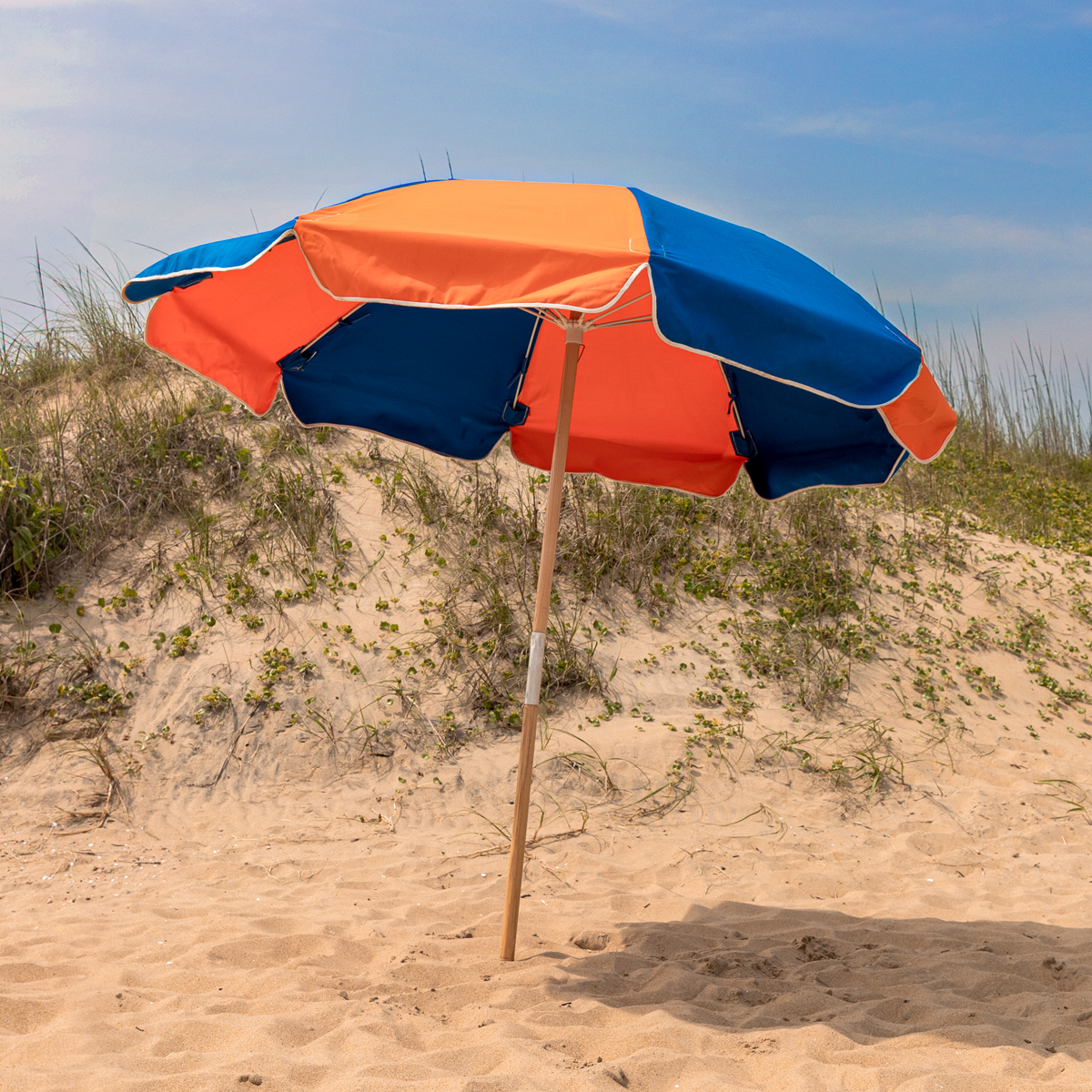
Beach Umbrellas

A traditional beach umbrella with a single center pole anchored in the sand. This is the most common type of personal beach shade and is sometimes called a beach parasol or sand umbrella.

🟢 Generally Allowed: Beach umbrellas are typically allowed throughout the Grand Strand, provided they meet local size and placement requirements.
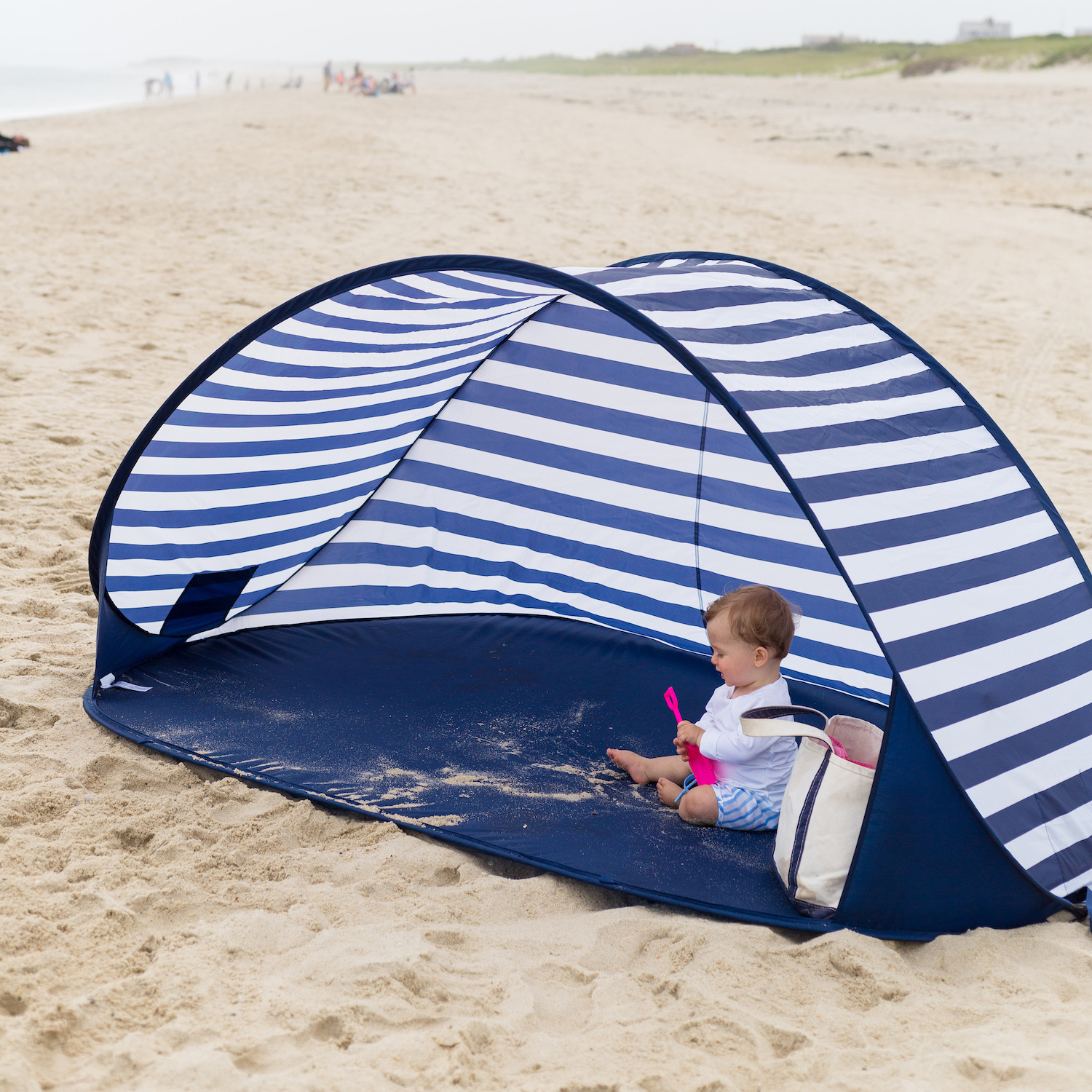
Baby Beach Tents

Small, enclosed or partially enclosed sun shelters designed specifically for infants and toddlers. Also commonly called baby sun shelters, infant tents, or baby UV tents.

🟢 Generally Allowed: Baby beach tents are typically permitted, as long as they’re designed for infants or toddlers and remain within local size limits.
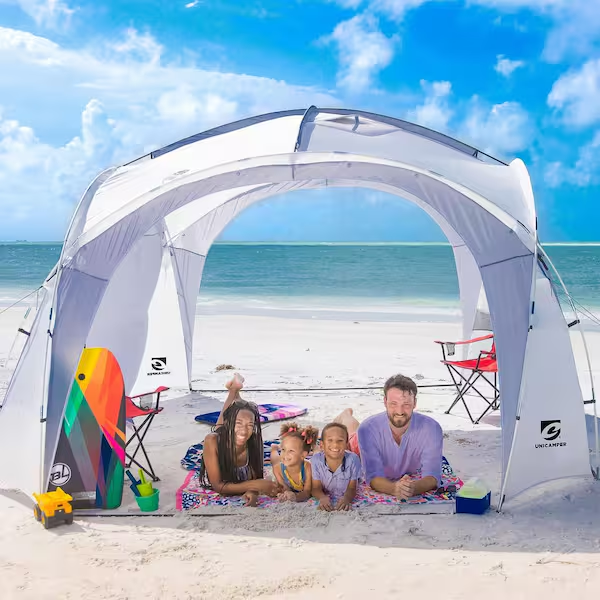
Beach Tents (Sun Shelters)

Portable fabric shelters designed for one or more people, typically with a flexible frame and one or more enclosed sides. These are also known as sun shelters, pop-up beach tents, beach shelters, or instant beach tents.

🟡 Depends on Location: Rules vary by municipality and season. Some Grand Strand beaches allow beach tents, while others prohibit them during parts of the year.
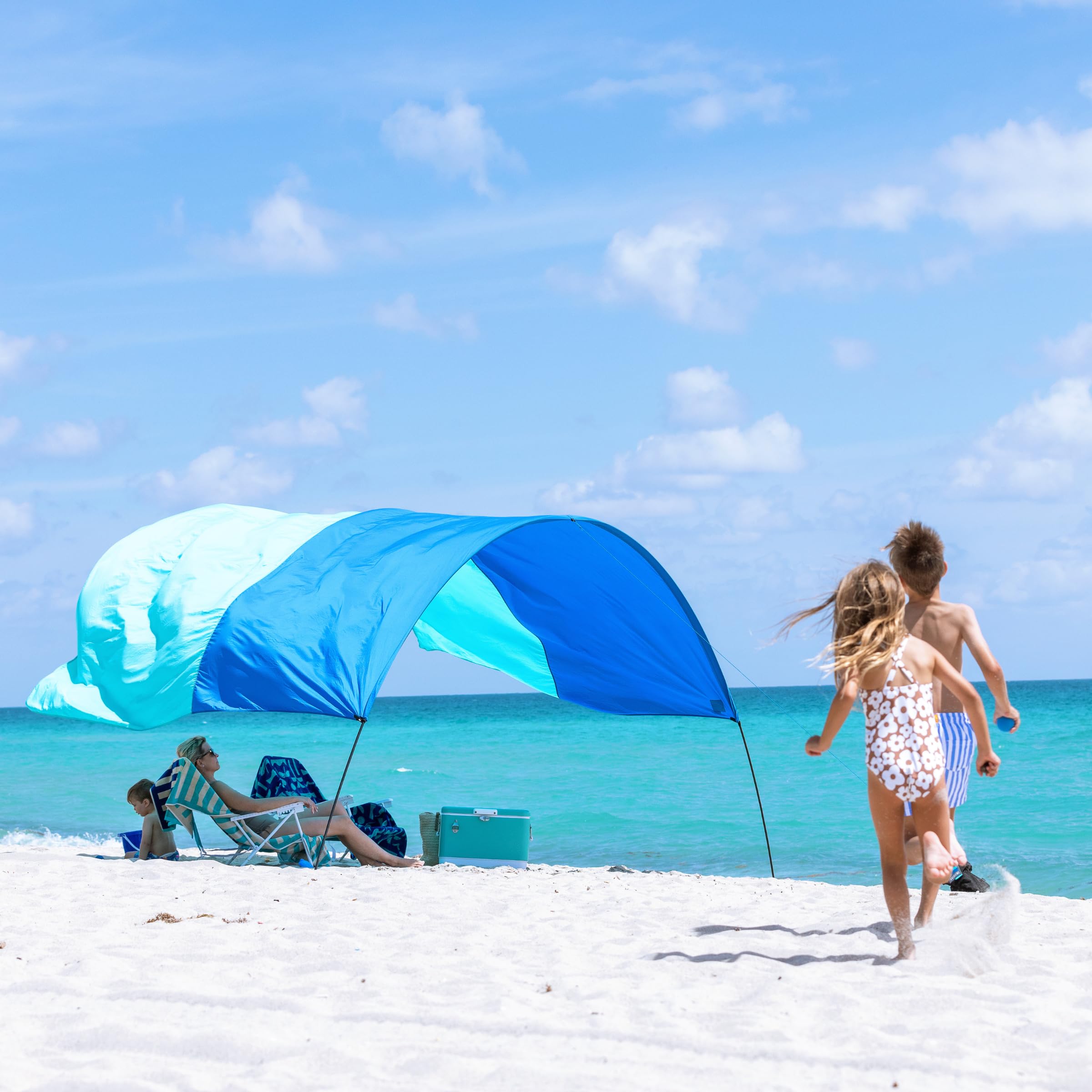
Wind-Powered Shades (Shibumi-Style)

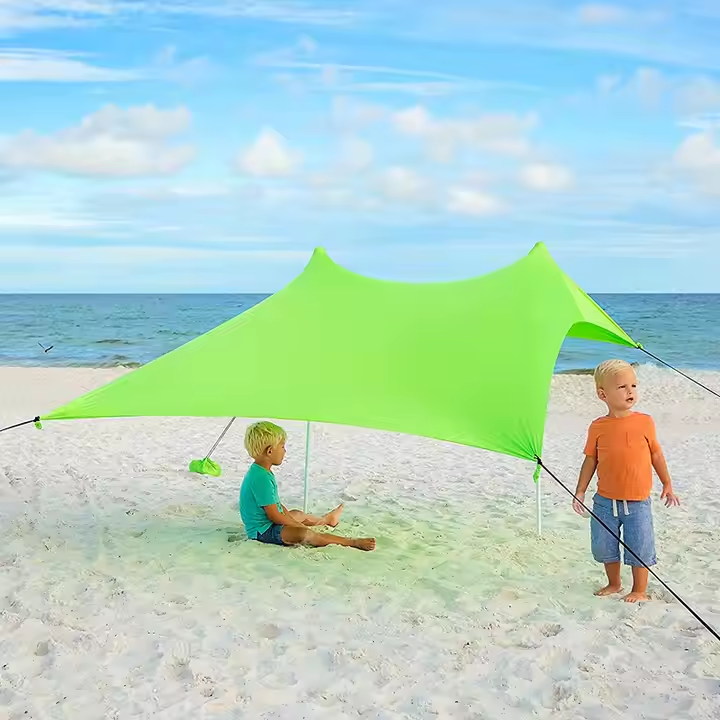
Lightweight shade devices that use wind to stay aloft rather than a rigid roof. Shibumi Shade is the best-known brand, but this category also includes other wind-powered shades and similar sail-style products.

🟡 Depends on Location: Some beaches allow wind-powered shades, while others regulate them the same as traditional tents or other shade structures.
Shade Sails & Beach Tarps

Flat or angled pieces of fabric stretched between poles, stakes, or anchor points to create shade. These are often called shade sails, beach tarps, sun tarps, or DIY beach shelters.

🟡 Depends on Location: These are often subject to the same restrictions as beach tents and canopies, with rules varying depending on the beach and time of year.
Pop-Up Canopies & Beach Cabanas

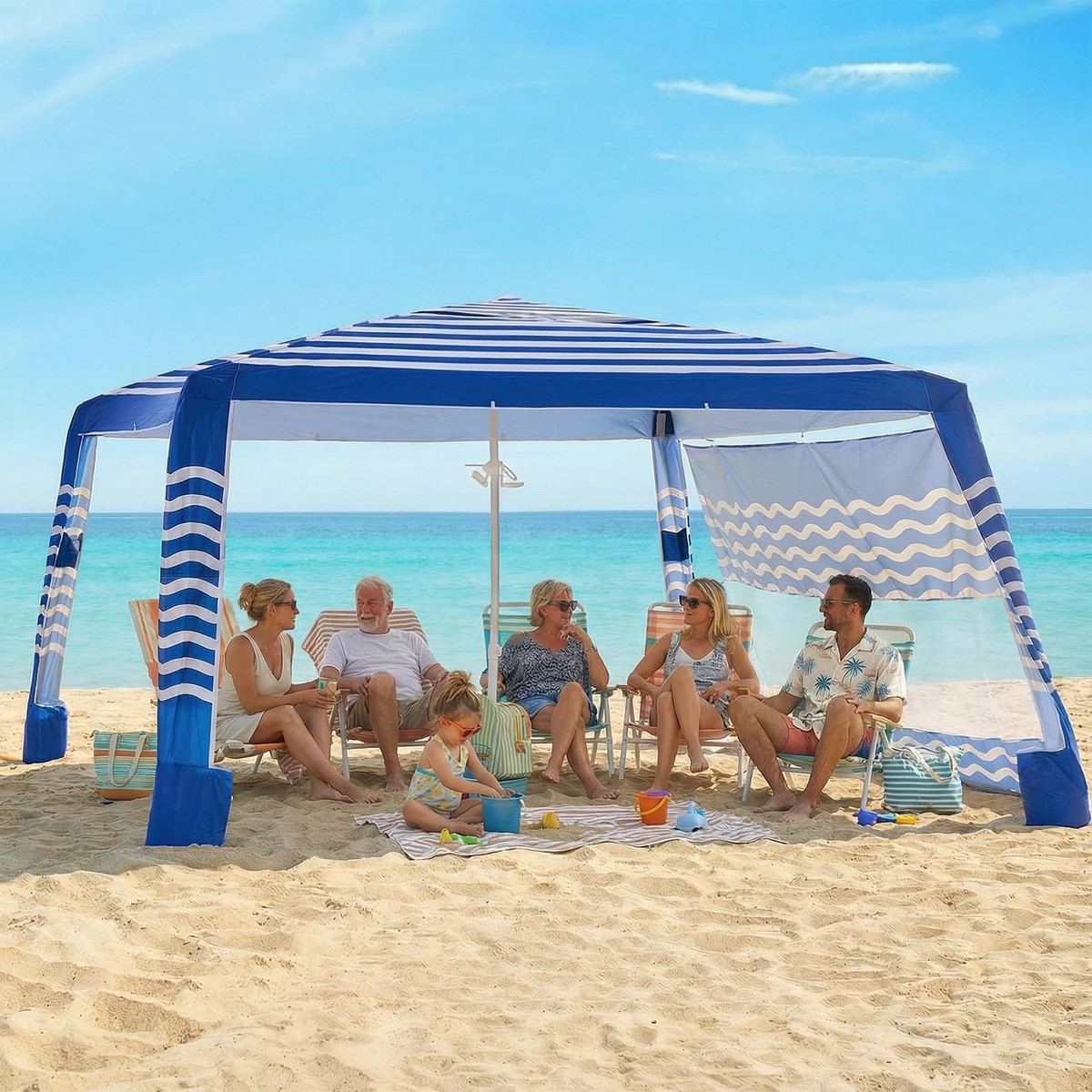
Freestanding shade structures supported by a rigid frame, usually with four legs. Common names include pop-up canopy, EZ-Up, instant canopy, beach cabana, portable gazebo, and event canopy.

🔴 Often Restricted: Pop-up canopies and cabanas are commonly restricted during the busy summer season, though some beaches allow them at other times or under specific conditions.
A safety partnership for residents & visitors